Decks
Every deck shares one set of written meanings; only the pictures change. Pick a deck for your readings, or bring your own: photograph its cards with your phone, add what each card means to you, and deal with it here.
Your own decks
Loading…
Decks on KnowTarot
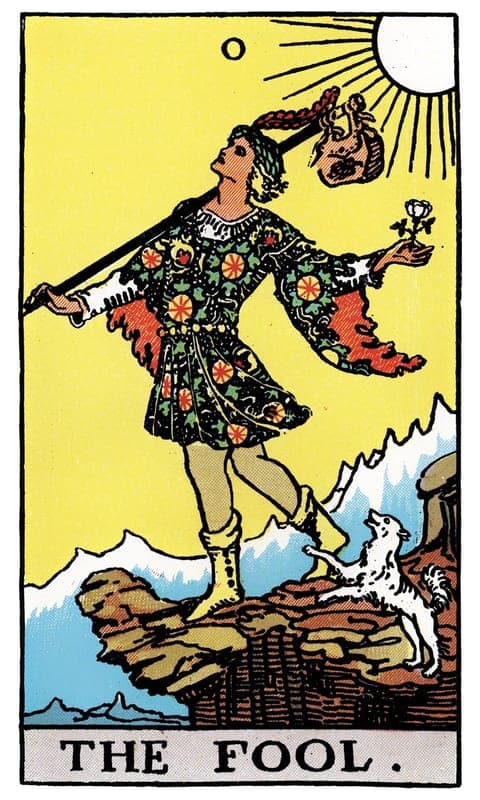
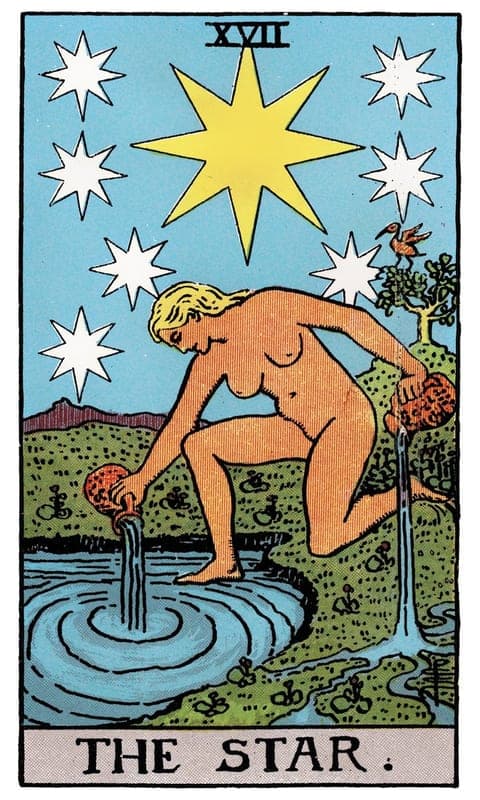
Rider–Waite–Smith
Pamela Colman Smith, 1909
The classic deck drawn by Pamela Colman Smith under Arthur Edward Waite's direction. The first deck to fully illustrate all 78 cards, and the one the card meanings on this site are written for.
Reading this deck
Published in 1909, drawn by Pamela Colman Smith to A. E. Waite's design, this was the first widely available deck in which every card, the number cards included, has a scene. Most modern decks follow its pictures, and most tarot books, including the meanings on this site, are written with it in mind.
Readers usually start from the picture: who is in it, what they are doing, and what that says about the position the card falls in.
Public domain (1909 Pamela-A printing, scans restored by Steve P.) · Source
✓ Your reading deck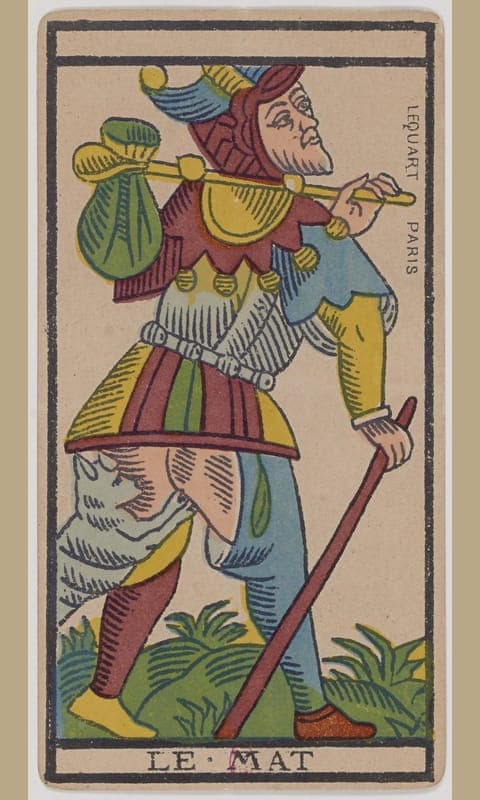
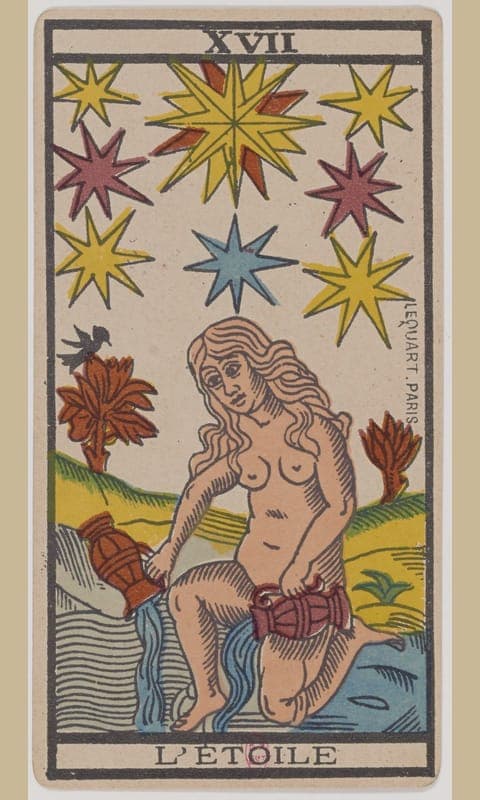
Tarot de Marseille
Lequart, Paris, 19th century
The classic French pattern from which most later decks descend. Only the trumps and court cards carry pictures; the pips show their suit symbols. Justice is numbered VIII and Strength XI, the historical order; we place them by name so meanings line up.
Reading this deck
The Tarot de Marseille is the French pattern that settled in the seventeenth and eighteenth centuries and shaped most decks since. Its trumps carry French titles and Roman numerals; Death is left unnamed, the Fool is unnumbered, and Justice comes eighth and Strength eleventh.
Its number cards show only their suit symbols, so Marseille readers read them through number and suit rather than a scene: the number gives the stage (one a seed, five a test, ten a fullness), the suit gives the field, and small details such as flowers, stems and the way the symbols are arranged add colour. The meanings on this site, written for Rider-Waite-Smith, still apply; the picture simply asks you to bring more of the reading yourself.
Public domain, scans from Wikimedia Commons · Source
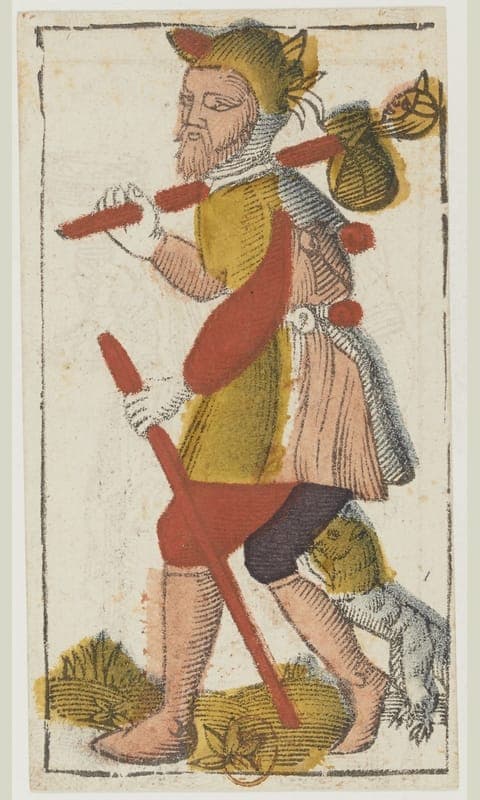
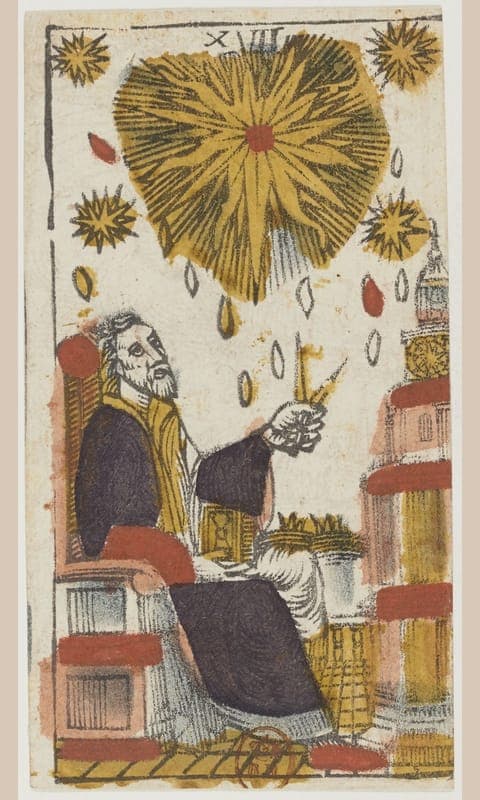
Tarot de Viéville
Jacques Viéville, c. 1650
One of the earliest surviving French decks, printed in Paris before the Marseille pattern settled. Several trumps sit in a different order from later decks; we match them by name.
Reading this deck
Printed in Paris by Jacques Viéville around 1650, this is one of the earliest surviving French tarots, made before the Marseille pattern had fully settled. Several trumps differ in design or order from the later standard, so the site matches them to the familiar cards by name.
Like the Marseille, its number cards show only suit symbols. Read them through number and suit, and treat the trumps' unusual designs as a second voice beside the written meaning rather than a contradiction of it.
Public domain, Bibliothèque nationale de France scans via Wikimedia Commons · Source
Visconti-Sforza
Bonifacio Bembo, c. 1450
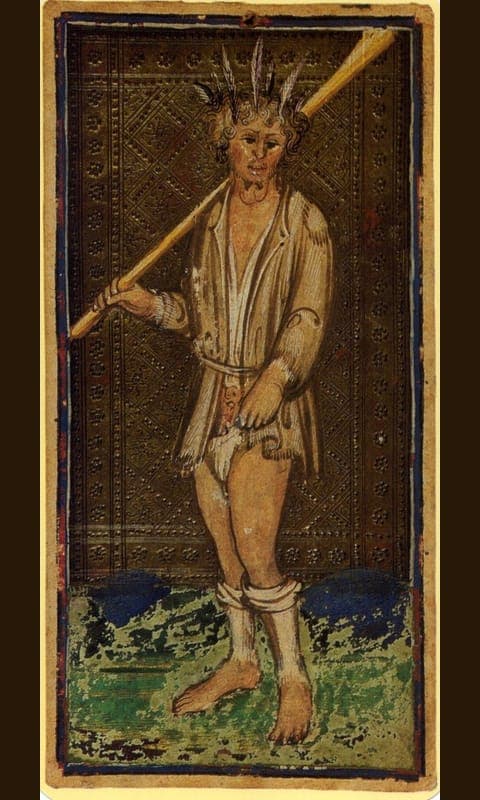
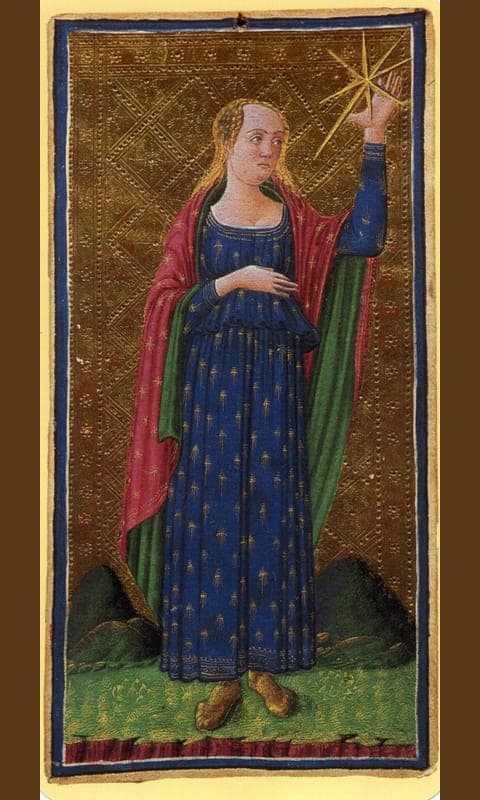
The most famous Renaissance tarot, hand-painted with gold leaf for the dukes of Milan. Four cards of the original are lost (the Devil, the Tower, the Three of Swords and the Knight of Coins) and the King of Cups is absent from these scans; those five show the Rider-Waite-Smith card instead.
Reading this deck
Painted with gold leaf in Milan around 1450 for the ruling Visconti and Sforza families, this is among the oldest tarot cards to survive. Tarot began as a card game, tarocchi, and these cards were made to be played with; reading tarot for meaning came centuries later, in eighteenth-century France.
The trumps have no titles or numbers, and the number cards show only their suit symbols. Reading with them means letting the painted courtly scenes speak beside the later written meanings, which this site keeps as the common language across decks.
Public domain, scans of a facsimile edition via Wikimedia Commons · Source
Sola Busca
c. 1491
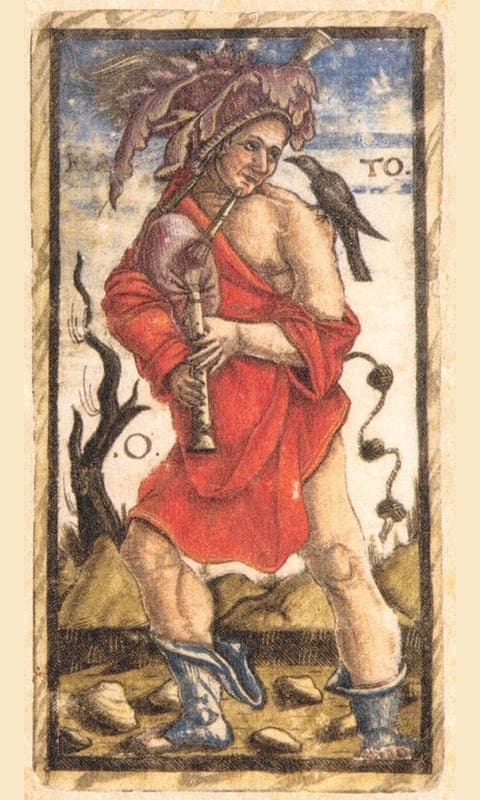
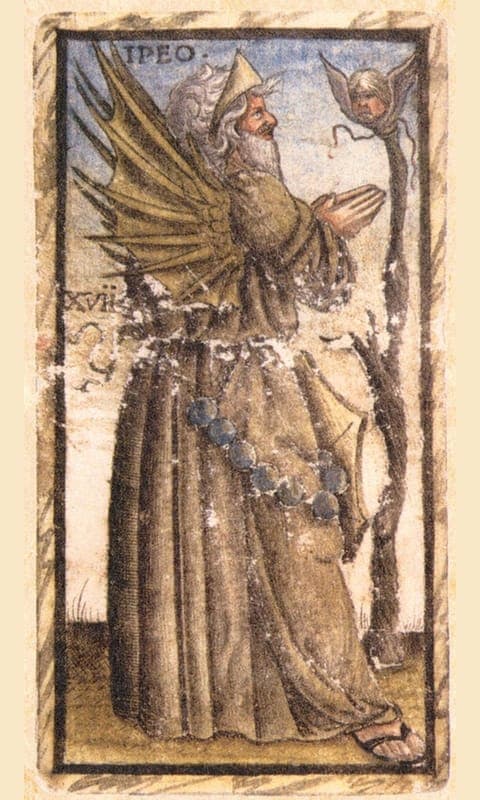
The earliest fully illustrated 78-card tarot, engraved in northern Italy, and a direct influence on Pamela Colman Smith's minor arcana. Its trumps are Roman and biblical figures rather than the familiar allegories, so they are matched by number only.
Reading this deck
Engraved in northern Italy around 1491, the Sola Busca is the earliest surviving complete 78-card tarot, and the first in which every number card carries a scene. Pamela Colman Smith saw photographs of it before drawing the Rider-Waite-Smith deck, and several of her minor cards echo it.
Its trumps are not the familiar allegories but named figures from Roman history and the Bible, so the site matches them to the standard trumps by number only. Read a Sola Busca trump by its number in the sequence and let the figure add its own story; the number cards often sit close to their Rider-Waite-Smith descendants.
Public domain, scans from Wikimedia Commons · Source
Oswald Wirth
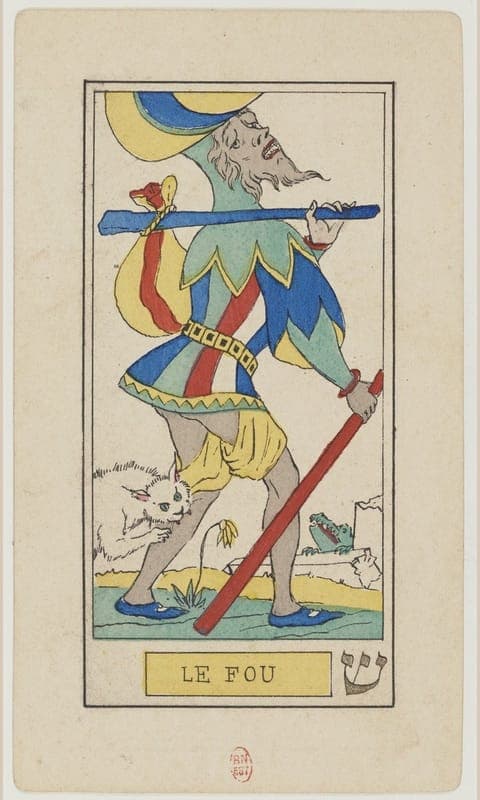
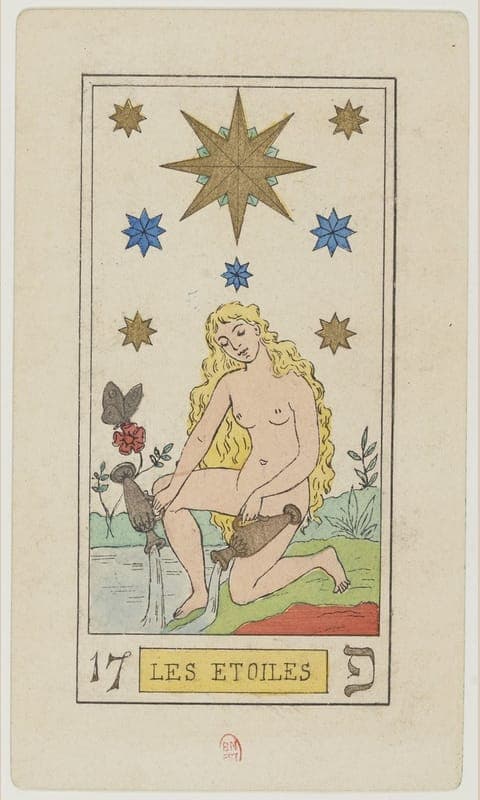
Oswald Wirth, 1889
Wirth's esoteric redrawing of the Marseille trumps for the French occult revival. Major Arcana only; the Minor Arcana show the Rider-Waite-Smith cards.
Reading this deck
The Swiss occultist Oswald Wirth redrew the Marseille trumps in 1889 for the French occult revival, adding Hebrew letters and symbols drawn from the esoteric thinking of his time. He made only the twenty-two trumps, as images for study and meditation as much as for reading.
Read his cards as the Marseille trumps with an added layer of symbolism. The minor cards in a reading here come from the Rider-Waite-Smith deck.
Public domain, Bibliothèque nationale de France scans via Wikimedia Commons · Source


Soimoi
Mike Koz, 2025
A contemporary 78-card deck by Mike Koz, made with a generative image model and released for free use. Painterly, modern scenes that follow the Rider-Waite-Smith structure card for card.
Reading this deck
Soimoi is a contemporary deck by Mike Koz, painted with a generative image model and released for free use in 2025. It follows the Rider-Waite-Smith structure card for card, so the written meanings on this site fit it directly.
Its scenes are reimagined rather than copied, so it is worth noticing where a Soimoi card adds or changes a detail: those differences are often where a reading finds something new.
CC BY 4.0, Mike Koz (koz.tv) · Source